Introduction
As Taiwan's 2026 nine-in-one local elections approach, parties are rolling out their nominations and groundwork, and campaign teams are entering the early organization-building phase.
As campaign work ramps up — from supporter cultivation and local mobilization to internal collaboration — the volume of information and operational complexity grow in tandem, pushing campaign management toward a more systematic approach.
What Is an "Election CRM"? A System for Integrating Campaign Data and Supporting Decisions
In business, CRM (Customer Relationship Management) is a system for unifying customer data, tracking interaction history, and optimizing communication and service workflows. Its core value is not merely organizing data, but systematically accumulating and analyzing customer behavior to turn it into concrete actions — such as "precise communication," "audience segmentation," and "long-term relationship strategies."
In other words, the value of a CRM is not just collecting a list of customers, but understanding customer behavior through data and adjusting communication and decisions accordingly.
When this concept is applied to politics, the "customer" becomes the "voter."
Campaign teams likewise need to manage supporter data, record interactions, and communicate with and mobilize different segments. As a campaign grows, this information shifts from a supporting tool to a key foundation that shapes decisions and resource allocation.
Take U.S. elections as an example: voter data and mobilization systems have long been highly data-driven and systematized. Systems like NGP VAN have been used by the Democratic Party and related political organizations as key tools for integrating voter data and managing field action.
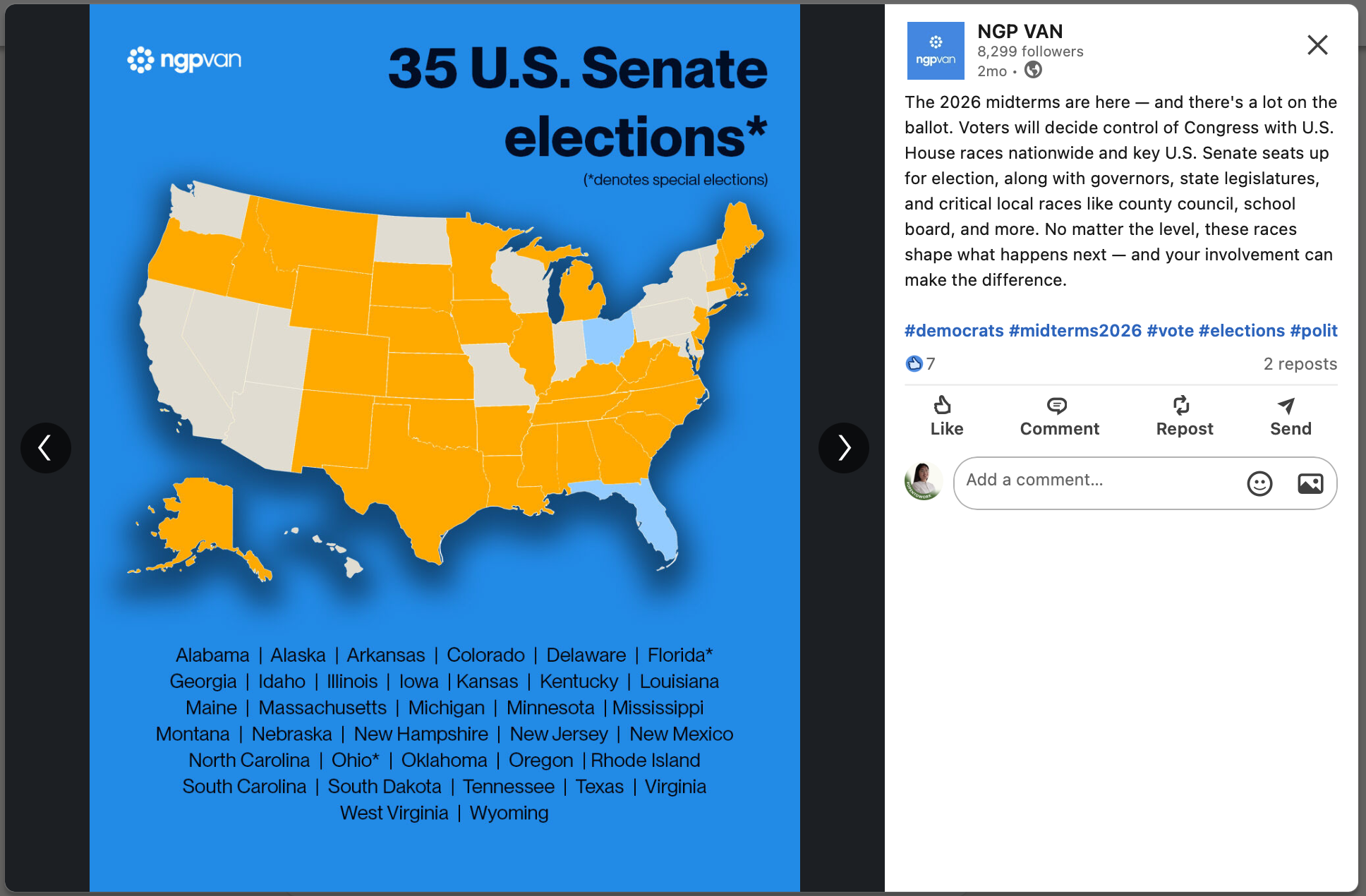
NGP VAN, widely used in U.S. Democratic Party campaigns, covers voter data integration, donation tracking, and voter-contact and mobilization tracking. By systematically integrating and analyzing audience data, it supports downstream communication strategy and action decisions. (Image source: NGP VAN LinkedIn)
When Choosing 2026 Campaign Tools, Why Are Traditional Methods No Longer Enough?
As the 2026 campaign moves into actual operation, teams are discovering that the way campaigns run is shifting into a new mode — no longer focused solely on relationship-building or street canvassing, but simultaneously involving data integration, team collaboration, and real-time decision efficiency.
First, the pace is faster. Online and news topics shift constantly, and teams need to track supporter status and the overall race in real time.
Second, data management has become more complex. From supporter lists and volunteer mobilization to events and service records, as campaign activity types and strategies multiply, the volume and dimensions of data grow too — making it hard for any single tool to integrate every workflow.
Finally, data matters more than ever. Whether shoring up the base, getting out the vote, or planning precinct strategy, teams increasingly rely on data analysis — alongside experience — to cut through noise and support decisions.
In this context, the familiar tools of the past — Excel, LINE groups, or paper rosters — are increasingly inadequate. They are convenient and low-cost, but data is scattered, updates lag, and cross-team integration is difficult. This is why the "election CRM" is becoming the core management approach better suited to modern campaigns.
Three Common Pain Points in Campaign Management
Pain Point 1: Supporter Data Is Scattered
Supporter lists are often spread across different tools and media — Excel, phone contacts, or paper records. Without a unified database, supporter interaction history is hard to track completely, and it's difficult to sustain follow-up base-shoring and mobilization.
When data isn't systematically organized, its overall value is also hard to accumulate.
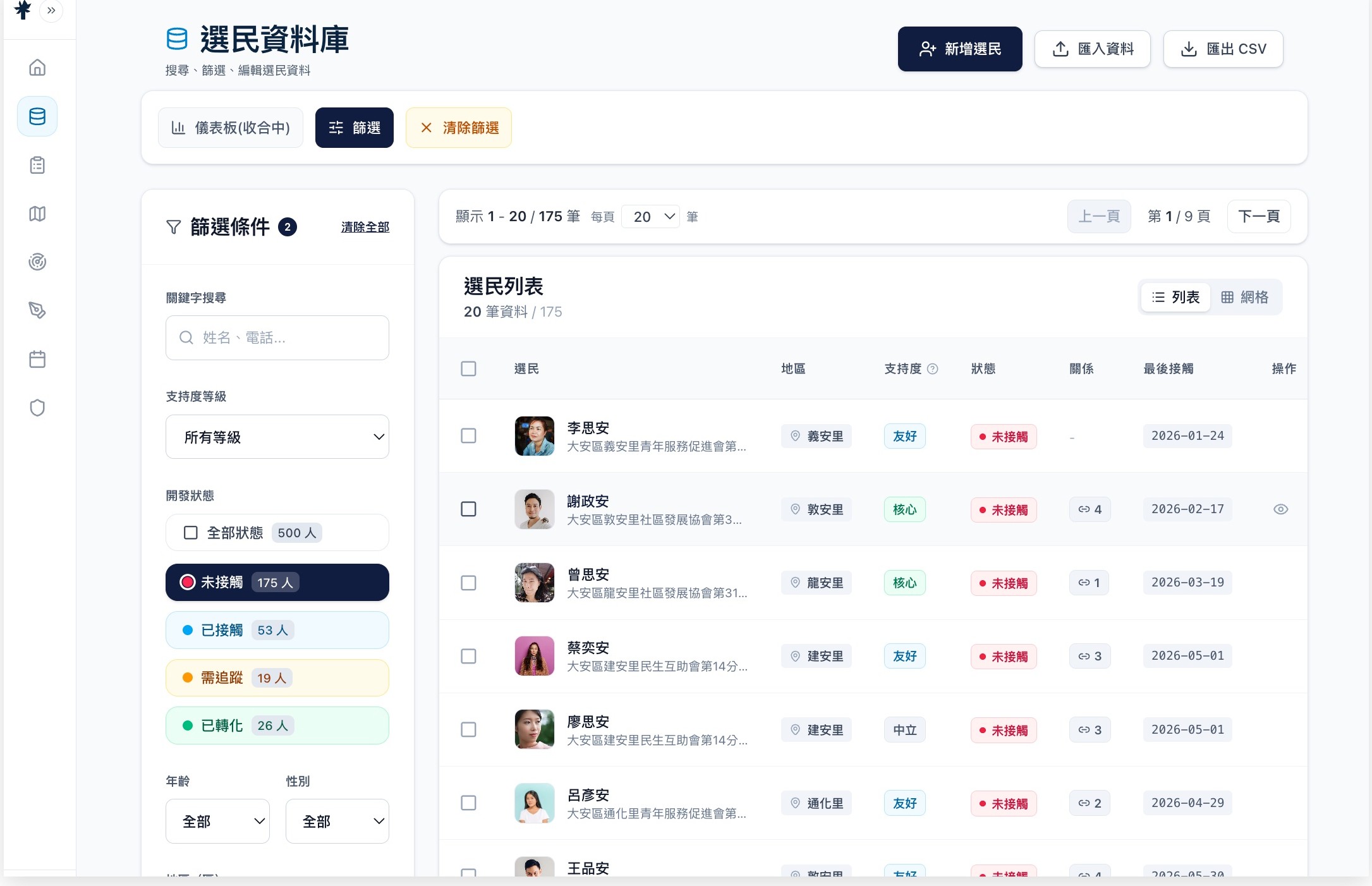
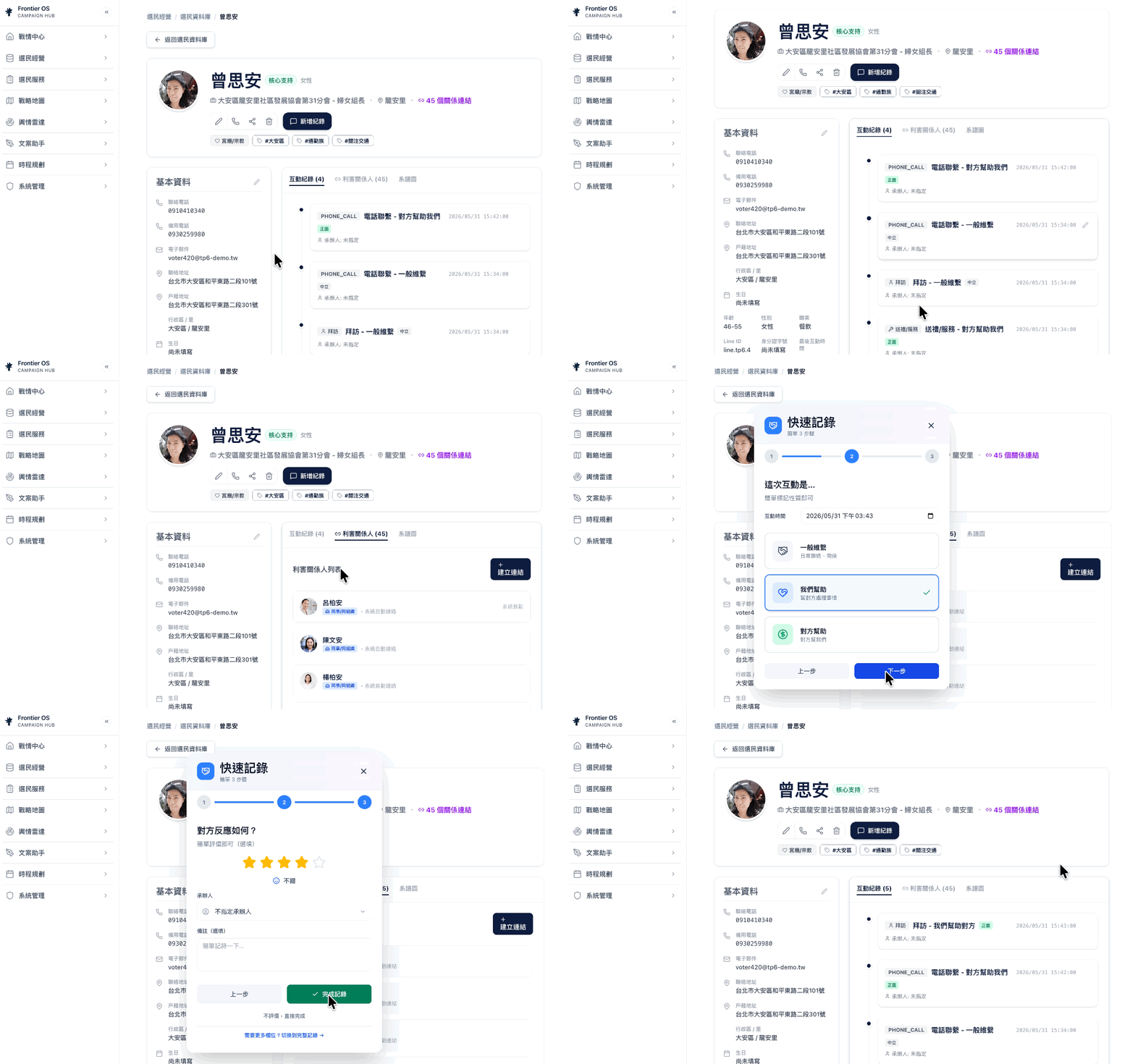
Frontier OS helps campaign teams centralize voter records — every potential contact can be tagged and categorized, with ongoing tracking of interaction history and status. This way, previously scattered lists become systematically managed, giving follow-up communication and mobilization a firmer basis.
Pain Point 2: Insufficient Team Collaboration
Campaign teams rely on highly collaborative project management, yet in practice still depend heavily on group messages and verbal hand-offs.
As information passes between staff, the office director, and volunteers, things easily fall out of sync — missed tasks, unclear progress, or service cases that can't be tracked continuously — undermining overall execution.

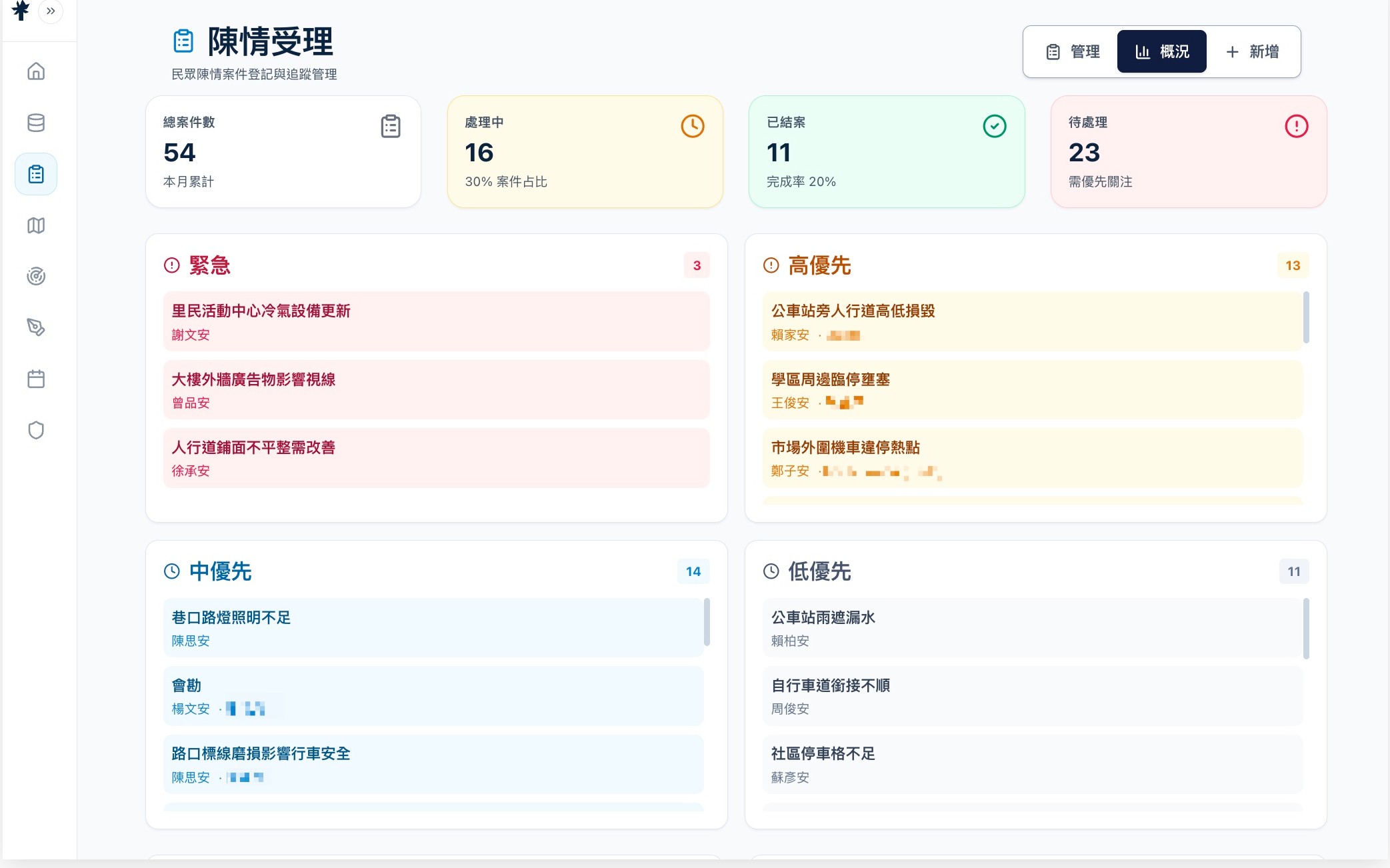
Frontier OS provides a voter-service management module where team members can add and edit district events and service cases by permission. With real-time logging and categorization, the team can track case progress and improve communication efficiency, while all handling records are systematically preserved for more consistent, evidence-based follow-up.
Pain Point 3: Lack of a Real-Time Basis for Decisions
In a real campaign, many decisions still rely on experience — such as canvassing routes or precinct-cultivation priorities. But without real-time data support, resource allocation is hard to make precise.
At the same time, without visualized situational information, teams struggle to quickly grasp the status of each area, limiting both decision speed and accuracy.
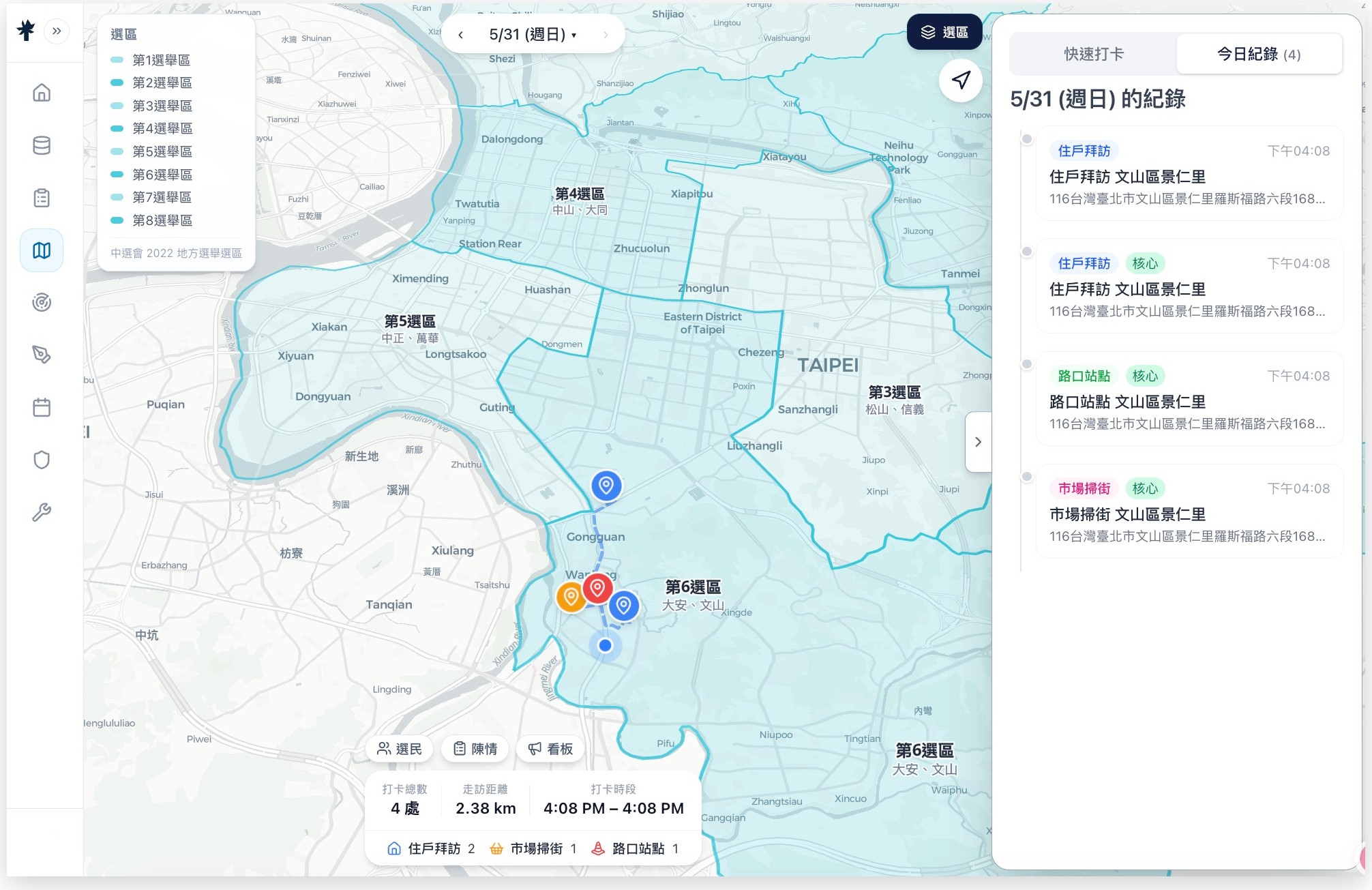
Frontier OS visualizes district data on a map, helping campaign teams quickly grasp the status of each area. With visualized situational information, resource allocation and decision-making gain a clearer basis to work from.
Using an Election CRM to Improve Voter Cultivation and Decision Efficiency
In the fast-changing 2026 campaign environment, Frontier OS combines an election-map module with real-time data analysis to give campaign teams a visualized, integrated data foundation. Through clear and neutral data organization, it helps teams build a clearer, more consistent basis for decisions when planning precincts and strategy.
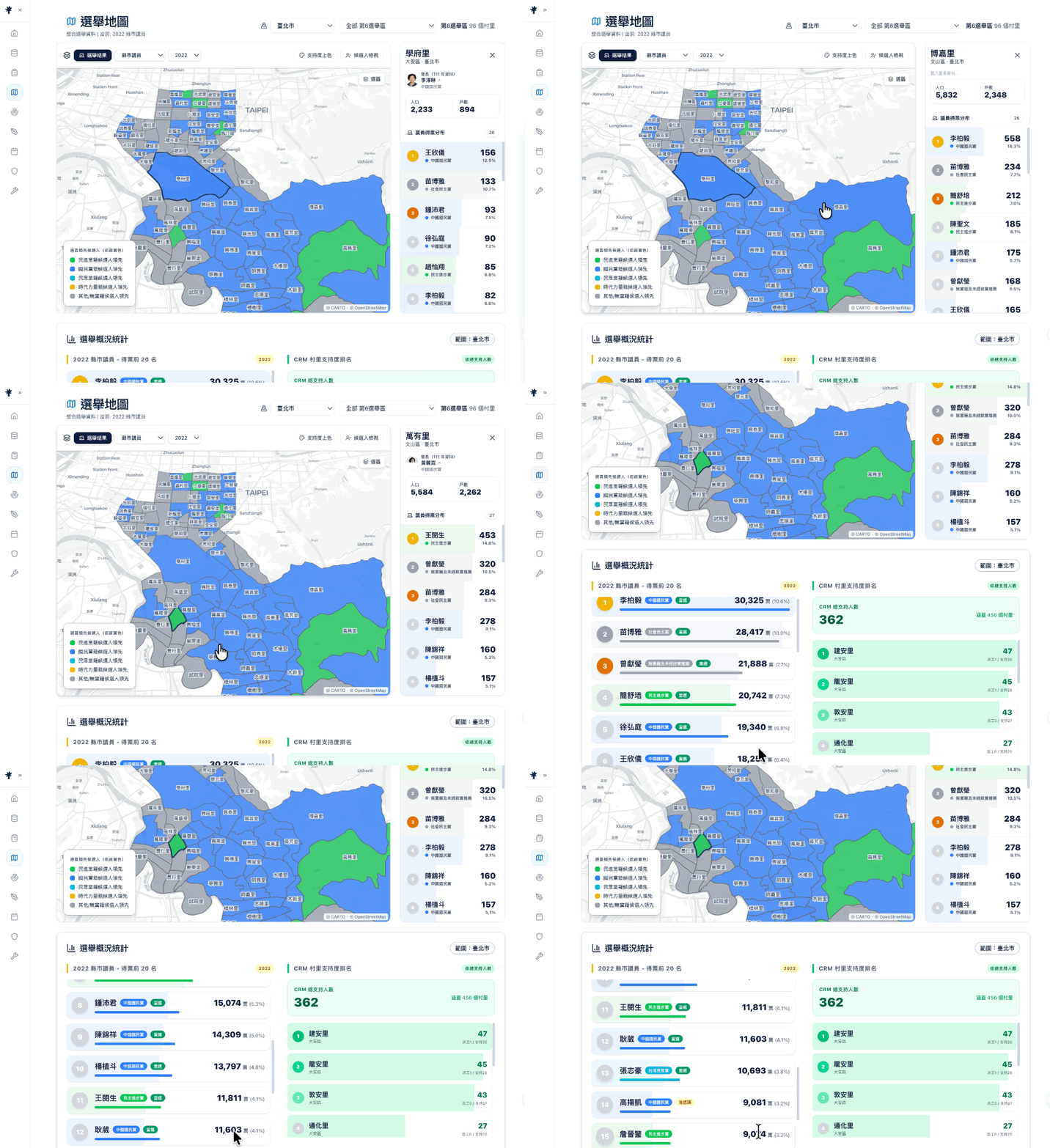
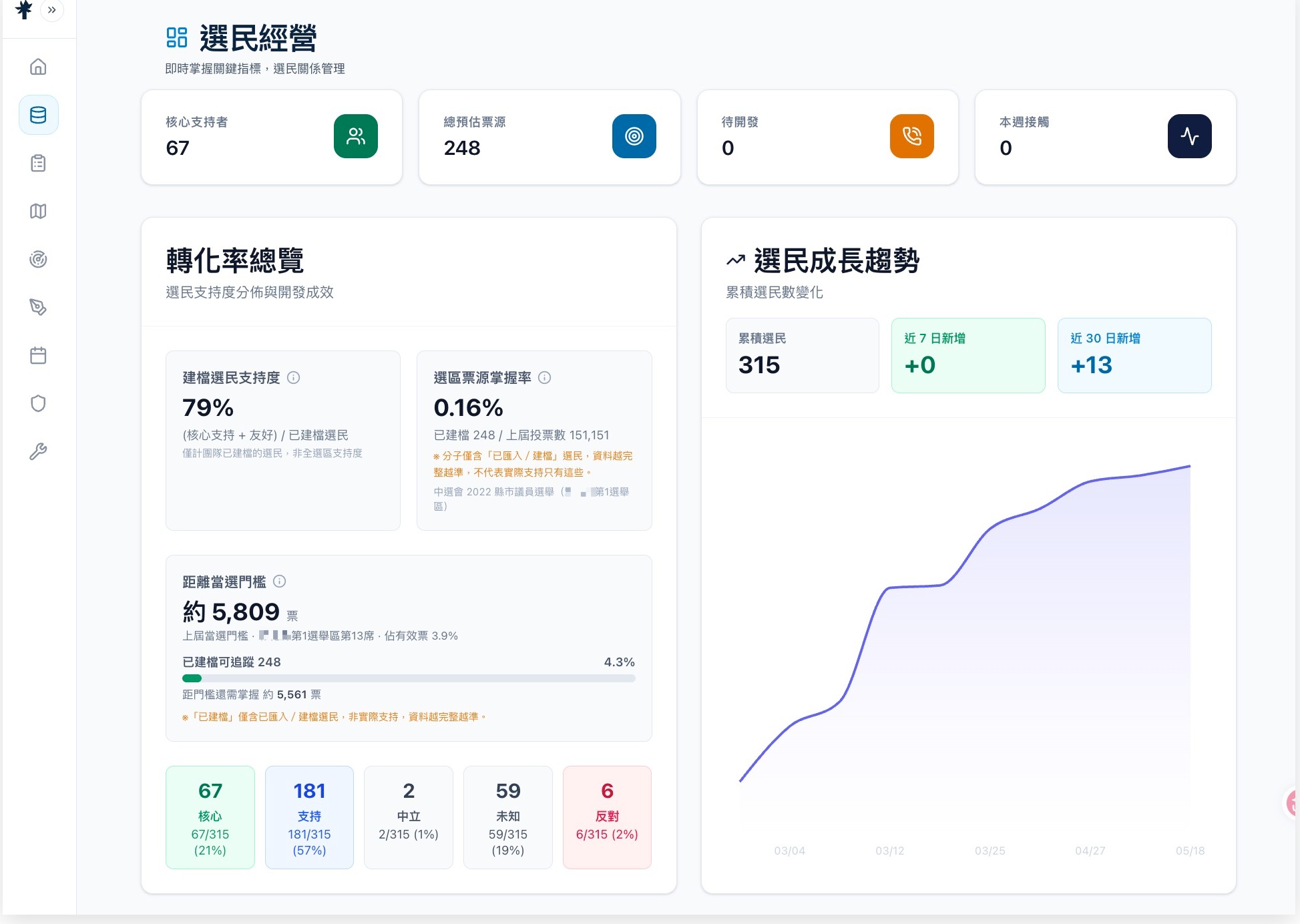
Complete election-history data is integrated into the system dashboard. For candidates and teams new to 2026, this makes it faster to grasp past race structures and key shifts — an important reference for campaign planning and strategic judgment.
Using an Election CRM for Efficient Air-Game and Ground-Game Management
Air Game | Real-Time Sentiment Monitoring for Faster, Sharper Issue Response
In the run-up to 2026, air-game information sources are highly fragmented — coming from search engines, news media, and social platforms — and public opinion shifts far faster than before. For campaign teams, how quickly they can organize and interpret this information has become a key factor in decisions.
At the same time, some traditional analysis tools carry built-in frames or biases in how they organize and interpret data, which can skew conclusions. What a campaign needs is not just an aggregation tool, but a systematic platform with neutrality and real-time analysis.
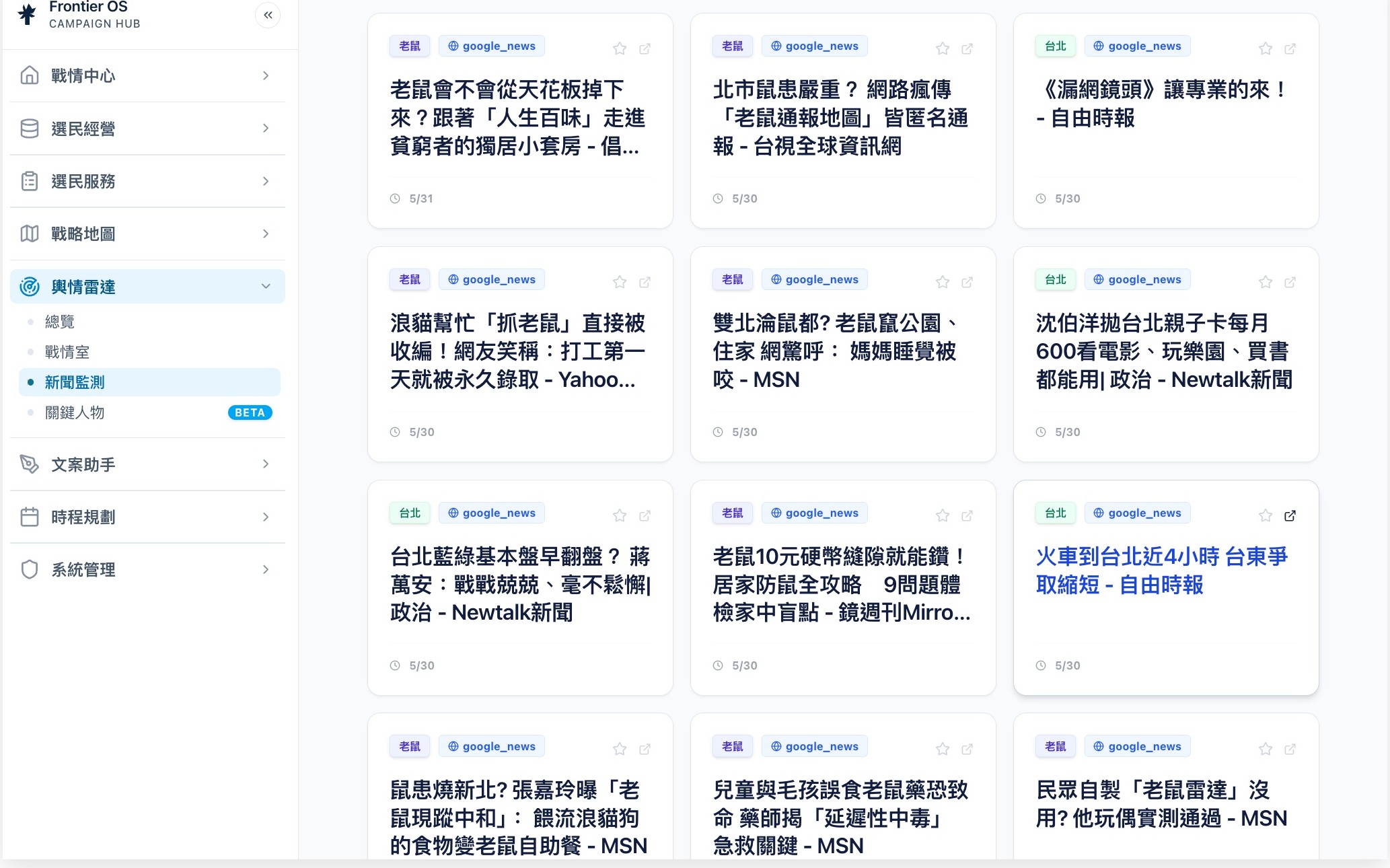
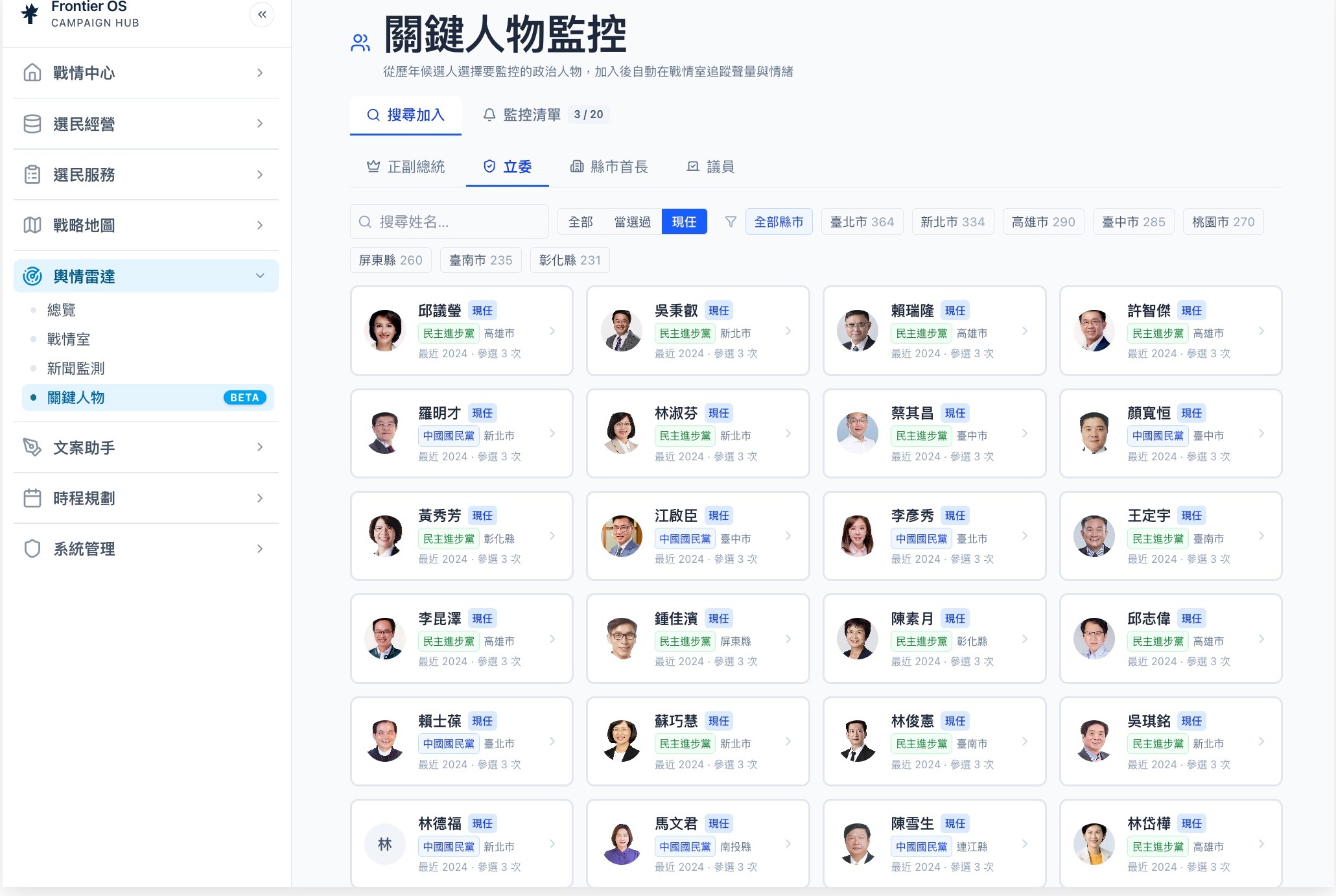

The Frontier OS sentiment-monitoring module scrapes and analyzes news in real time, quickly organizing the day's hot topics to help teams stay on top of shifting issues and respond faster. It supports campaign attack-and-defense and timely commentary positioning, strengthening issue command and voter communication while improving visibility and approval.
Ground Game | Optimizing Schedules and Field Mobilization to Lower Communication Cost and Improve Execution
On the ground-game side, the core challenge for campaign teams is the efficiency of coordinating action and resources. From voter service and scheduling to canvassing-route planning, the past relied on manual division of labor and real-time communication — but as the campaign tempo speeds up, this easily produces information gaps and execution delays.
The Frontier OS voter-service and schedule-management modules integrate calendar scheduling, assistant task assignment, and route planning to help teams organize field action more systematically. By digitizing workflows and clarifying tasks, it not only lowers communication and coordination costs but also frees up human resources for higher-value strategic work, improving overall execution and on-the-ground responsiveness.
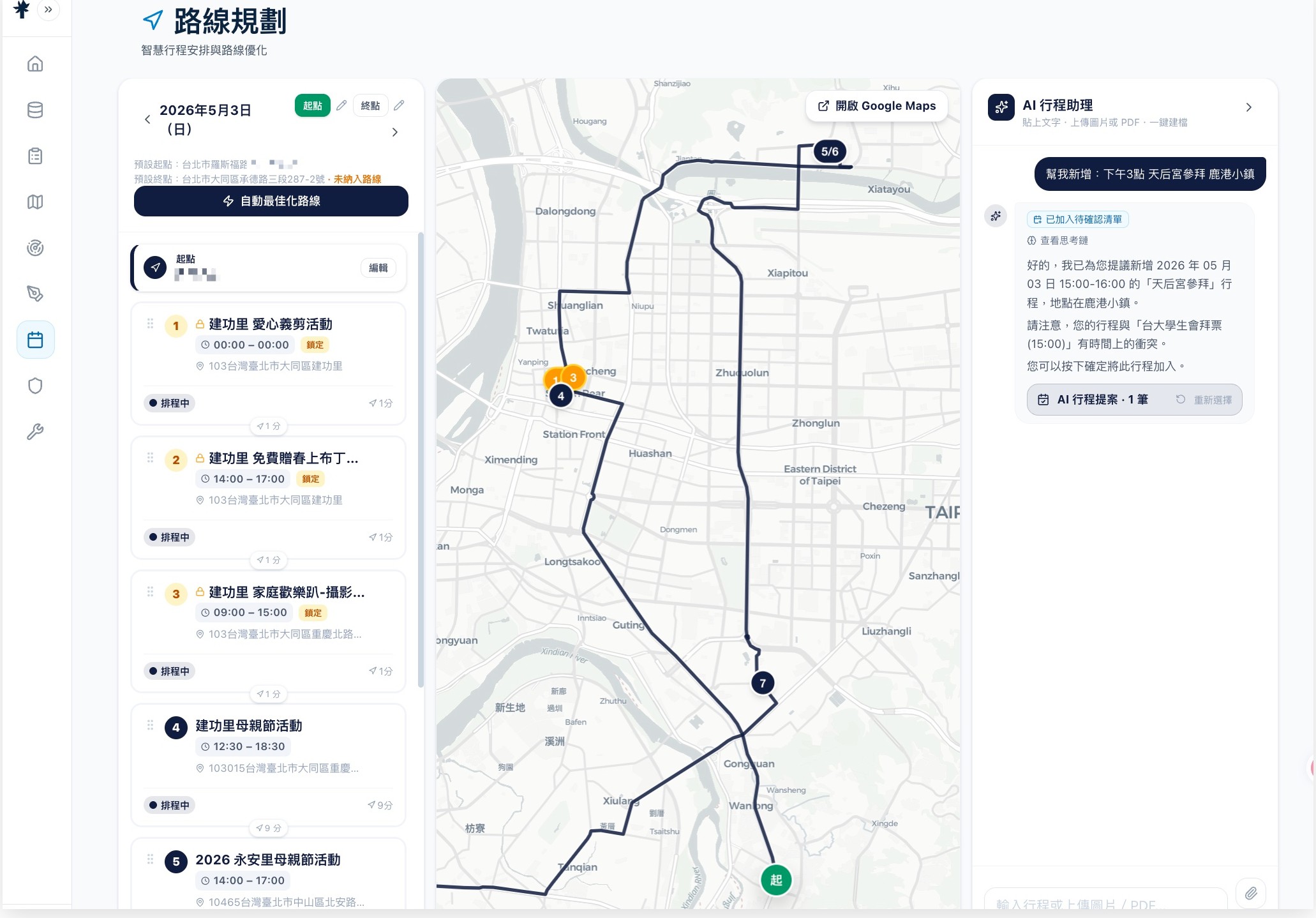
Scheduling is a core task for a campaign office, especially dense during pre-election or weekend activity peaks. The Frontier OS schedule-assistant module helps teams plan and allocate time more effectively, integrating scheduling and action arrangements to improve time efficiency and execution accuracy.
2026 Campaign Tool Recommendation: Frontier OS, an All-in-One Campaign Management System
FrontierLab is a Taiwan-based political-technology company. We serve legislators, city councilors, county magistrates, and candidates at every level, along with their campaign teams — with the goal of bringing Silicon Valley–grade digital tools to Taiwan's campaign frontline.
With FrontierLab's smart campaign system, teams can integrate voter data, service cases, sentiment intelligence, and strategic analysis, improving overall decision efficiency and organizational collaboration.
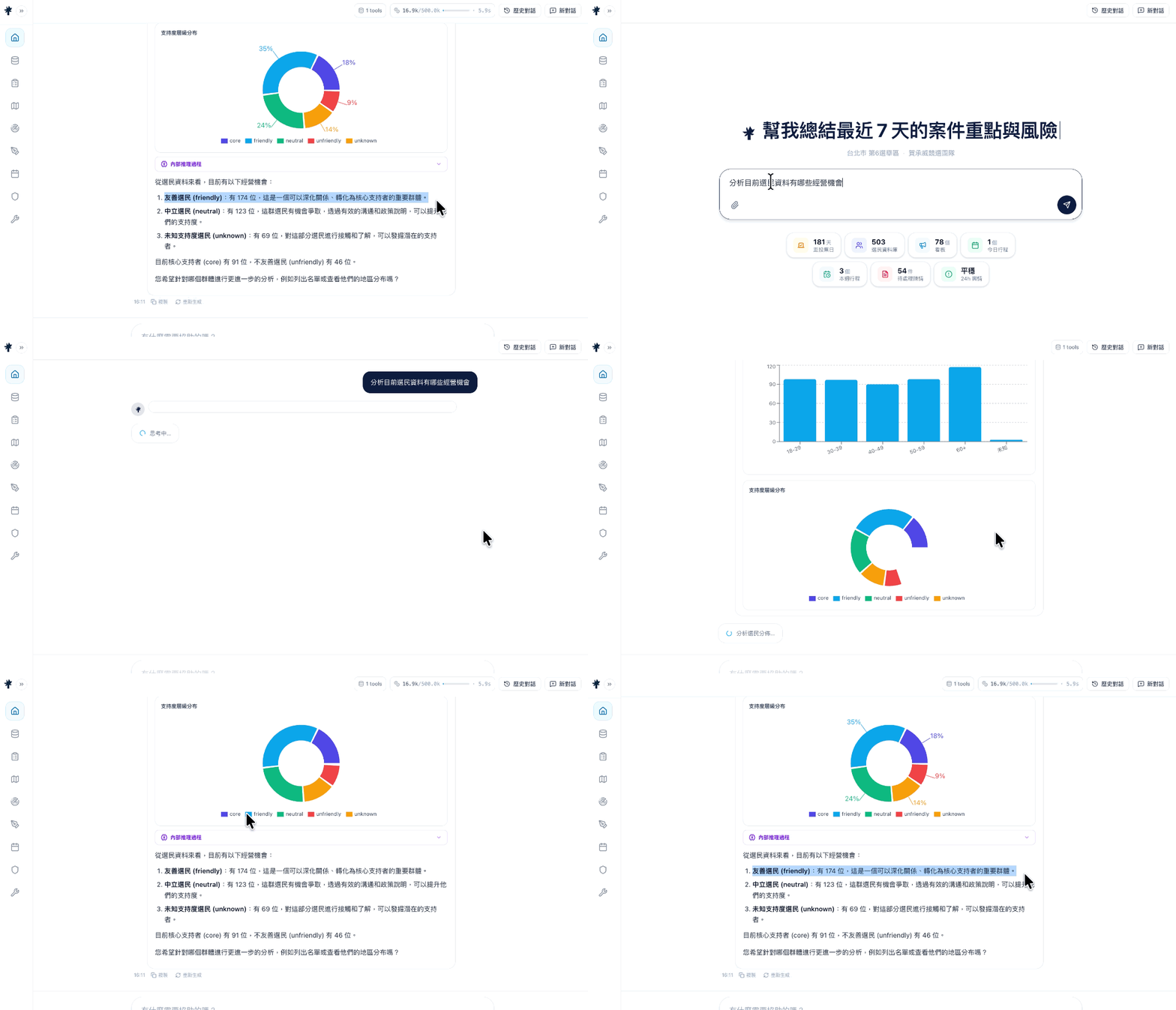
Book a product demo today to see how Frontier OS can help your campaign team build a data-driven management framework.
Frequently Asked Questions (FAQ)
Q1: What is an election CRM, and why do campaign teams need it?
An election CRM (voter relationship management system) is a campaign tool built specifically to manage voter, supporter, and volunteer data. By integrating voter data, interaction records, service cases, and event participation, it helps campaign teams build a complete voter database that serves as a foundation for campaign planning, mobilization, and decision analysis.
Q2: How can you effectively manage supporter lists and voter data?
When supporter lists are scattered across Excel, LINE groups, phone contacts, or paper, you get duplicates, omissions, and out-of-sync updates. By building a unified database with an election CRM, campaign teams can centrally manage voter data, track interactions, and tag support levels, improving the efficiency of base-shoring, GOTV, and voter cultivation.
Q3: What campaign tools are worth recommending for the 2026 elections?
Modern campaigns no longer rely on relationships and experience alone; many teams are adopting digital tools to improve efficiency. Common needs include voter data management, scheduling, volunteer mobilization, sentiment analysis, and precinct cultivation. Frontier OS offers an integrated campaign management platform that helps teams unify ground-game and air-game resources and improve overall execution.
Q4: How does an election CRM help campaign teams work more efficiently?
An election CRM brings supporter data, voter-service cases, activity records, and team tasks onto one platform. Through permission management, case tracking, and real-time sync, it reduces manual organizing and repeated communication, letting teams focus more on voter cultivation and strategy execution.
Q5: How can data analysis improve the quality of campaign decisions?
Data analysis helps teams quickly grasp precinct structure, supporter distribution, and issue trends, reducing the error of relying on experience alone. By combining an election CRM with an election map, historical election data, and sentiment-analysis tools, teams can more effectively plan precincts, allocate resources, and design campaign strategy.